
### WordPress - Web publishing software Copyright 2011-2019 by the contributors This program is free software; you can redistribute it and/or modify it under the terms of the GNU General Public License as published by the Free Software Foundation; either version 2 of the License, or (at your option) any later version. This program is distributed in the hope that it will be useful, but WITHOUT ANY WARRANTY; without even the implied warranty of MERCHANTABILITY or FITNESS FOR A PARTICULAR PURPOSE. See the GNU General Public License for more details. You should have received a copy of the GNU General Public License along with this program; if not, write to the Free Software Foundation, Inc., 51 Franklin St, Fifth Floor, Boston, MA 02110-1301 USA This program incorporates work covered by the following copyright and permission notices: b2 is (c) 2001, 2002 Michel Valdrighi - m@tidakada.com - http://tidakada.com Wherever third party code has been used, credit has been given in the code's comments. b2 is released under the GPL and WordPress - Web publishing software Copyright 2003-2010 by the contributors WordPress is released under the GPL --- ### GNU GENERAL PUBLIC LICENSE Version 2, June 1991 Copyright (C) 1989, 1991 Free Software Foundation, Inc. 51 Franklin Street, Fifth Floor, Boston, MA 02110-1301, USA Everyone is permitted to copy and distribute verbatim copies of this license document, but changing it is not allowed. ### Preamble The licenses for most software are designed to take away your freedom to share and change it. By contrast, the GNU General Public License is intended to guarantee your freedom to share and change free software--to make sure the software is free for all its users. This General Public License applies to most of the Free Software Foundation's software and to any other program whose authors commit to using it. (Some other Free Software Foundation software is covered by the GNU Lesser General Public License instead.) You can apply it to your programs, too. When we speak of free software, we are referring to freedom, not price. Our General Public Licenses are designed to make sure that you have the freedom to distribute copies of free software (and charge for this service if you wish), that you receive source code or can get it if you want it, that you can change the software or use pieces of it in new free programs; and that you know you can do these things. To protect your rights, we need to make restrictions that forbid anyone to deny you these rights or to ask you to surrender the rights. These restrictions translate to certain responsibilities for you if you distribute copies of the software, or if you modify it. For example, if you distribute copies of such a program, whether gratis or for a fee, you must give the recipients all the rights that you have. You must make sure that they, too, receive or can get the source code. And you must show them these terms so they know their rights. We protect your rights with two steps: (1) copyright the software, and (2) offer you this license which gives you legal permission to copy, distribute and/or modify the software. Also, for each author's protection and ours, we want to make certain that everyone understands that there is no warranty for this free software. If the software is modified by someone else and passed on, we want its recipients to know that what they have is not the original, so that any problems introduced by others will not reflect on the original authors' reputations. Finally, any free program is threatened constantly by software patents. We wish to avoid the danger that redistributors of a free program will individually obtain patent licenses, in effect making the program proprietary. To prevent this, we have made it clear that any patent must be licensed for everyone's free use or not licensed at all. The precise terms and conditions for copying, distribution and modification follow. ### TERMS AND CONDITIONS FOR COPYING, DISTRIBUTION AND MODIFICATION **0.** This License applies to any program or other work which contains a notice placed by the copyright holder saying it may be distributed under the terms of this General Public License. The "Program", below, refers to any such program or work, and a "work based on the Program" means either the Program or any derivative work under copyright law: that is to say, a work containing the Program or a portion of it, either verbatim or with modifications and/or translated into another language. (Hereinafter, translation is included without limitation in the term "modification".) Each licensee is addressed as "you". Activities other than copying, distribution and modification are not covered by this License; they are outside its scope. The act of running the Program is not restricted, and the output from the Program is covered only if its contents constitute a work based on the Program (independent of having been made by running the Program). Whether that is true depends on what the Program does. **1.** You may copy and distribute verbatim copies of the Program's source code as you receive it, in any medium, provided that you conspicuously and appropriately publish on each copy an appropriate copyright notice and disclaimer of warranty; keep intact all the notices that refer to this License and to the absence of any warranty; and give any other recipients of the Program a copy of this License along with the Program. You may charge a fee for the physical act of transferring a copy, and you may at your option offer warranty protection in exchange for a fee. **2.** You may modify your copy or copies of the Program or any portion of it, thus forming a work based on the Program, and copy and distribute such modifications or work under the terms of Section 1 above, provided that you also meet all of these conditions: **a)** You must cause the modified files to carry prominent notices stating that you changed the files and the date of any change. **b)** You must cause any work that you distribute or publish, that in whole or in part contains or is derived from the Program or any part thereof, to be licensed as a whole at no charge to all third parties under the terms of this License. **c)** If the modified program normally reads commands interactively when run, you must cause it, when started running for such interactive use in the most ordinary way, to print or display an announcement including an appropriate copyright notice and a notice that there is no warranty (or else, saying that you provide a warranty) and that users may redistribute the program under these conditions, and telling the user how to view a copy of this License. (Exception: if the Program itself is interactive but does not normally print such an announcement, your work based on the Program is not required to print an announcement.) These requirements apply to the modified work as a whole. If identifiable sections of that work are not derived from the Program, and can be reasonably considered independent and separate works in themselves, then this License, and its terms, do not apply to those sections when you distribute them as separate works. But when you distribute the same sections as part of a whole which is a work based on the Program, the distribution of the whole must be on the terms of this License, whose permissions for other licensees extend to the entire whole, and thus to each and every part regardless of who wrote it. Thus, it is not the intent of this section to claim rights or contest your rights to work written entirely by you; rather, the intent is to exercise the right to control the distribution of derivative or collective works based on the Program. In addition, mere aggregation of another work not based on the Program with the Program (or with a work based on the Program) on a volume of a storage or distribution medium does not bring the other work under the scope of this License. **3.** You may copy and distribute the Program (or a work based on it, under Section 2) in object code or executable form under the terms of Sections 1 and 2 above provided that you also do one of the following: **a)** Accompany it with the complete corresponding machine-readable source code, which must be distributed under the terms of Sections 1 and 2 above on a medium customarily used for software interchange; or, **b)** Accompany it with a written offer, valid for at least three years, to give any third party, for a charge no more than your cost of physically performing source distribution, a complete machine-readable copy of the corresponding source code, to be distributed under the terms of Sections 1 and 2 above on a medium customarily used for software interchange; or, **c)** Accompany it with the information you received as to the offer to distribute corresponding source code. (This alternative is allowed only for noncommercial distribution and only if you received the program in object code or executable form with such an offer, in accord with Subsection b above.) The source code for a work means the preferred form of the work for making modifications to it. For an executable work, complete source code means all the source code for all modules it contains, plus any associated interface definition files, plus the scripts used to control compilation and installation of the executable. However, as a special exception, the source code distributed need not include anything that is normally distributed (in either source or binary form) with the major components (compiler, kernel, and so on) of the operating system on which the executable runs, unless that component itself accompanies the executable. If distribution of executable or object code is made by offering access to copy from a designated place, then offering equivalent access to copy the source code from the same place counts as distribution of the source code, even though third parties are not compelled to copy the source along with the object code. **4.** You may not copy, modify, sublicense, or distribute the Program except as expressly provided under this License. Any attempt otherwise to copy, modify, sublicense or distribute the Program is void, and will automatically terminate your rights under this License. However, parties who have received copies, or rights, from you under this License will not have their licenses terminated so long as such parties remain in full compliance. **5.** You are not required to accept this License, since you have not signed it. However, nothing else grants you permission to modify or distribute the Program or its derivative works. These actions are prohibited by law if you do not accept this License. Therefore, by modifying or distributing the Program (or any work based on the Program), you indicate your acceptance of this License to do so, and all its terms and conditions for copying, distributing or modifying the Program or works based on it. **6.** Each time you redistribute the Program (or any work based on the Program), the recipient automatically receives a license from the original licensor to copy, distribute or modify the Program subject to these terms and conditions. You may not impose any further restrictions on the recipients' exercise of the rights granted herein. You are not responsible for enforcing compliance by third parties to this License. **7.** If, as a consequence of a court judgment or allegation of patent infringement or for any other reason (not limited to patent issues), conditions are imposed on you (whether by court order, agreement or otherwise) that contradict the conditions of this License, they do not excuse you from the conditions of this License. If you cannot distribute so as to satisfy simultaneously your obligations under this License and any other pertinent obligations, then as a consequence you may not distribute the Program at all. For example, if a patent license would not permit royalty-free redistribution of the Program by all those who receive copies directly or indirectly through you, then the only way you could satisfy both it and this License would be to refrain entirely from distribution of the Program. If any portion of this section is held invalid or unenforceable under any particular circumstance, the balance of the section is intended to apply and the section as a whole is intended to apply in other circumstances. It is not the purpose of this section to induce you to infringe any patents or other property right claims or to contest validity of any such claims; this section has the sole purpose of protecting the integrity of the free software distribution system, which is implemented by public license practices. Many people have made generous contributions to the wide range of software distributed through that system in reliance on consistent application of that system; it is up to the author/donor to decide if he or she is willing to distribute software through any other system and a licensee cannot impose that choice. This section is intended to make thoroughly clear what is believed to be a consequence of the rest of this License. **8.** If the distribution and/or use of the Program is restricted in certain countries either by patents or by copyrighted interfaces, the original copyright holder who places the Program under this License may add an explicit geographical distribution limitation excluding those countries, so that distribution is permitted only in or among countries not thus excluded. In such case, this License incorporates the limitation as if written in the body of this License. **9.** The Free Software Foundation may publish revised and/or new versions of the General Public License from time to time. Such new versions will be similar in spirit to the present version, but may differ in detail to address new problems or concerns. Each version is given a distinguishing version number. If the Program specifies a version number of this License which applies to it and "any later version", you have the option of following the terms and conditions either of that version or of any later version published by the Free Software Foundation. If the Program does not specify a version number of this License, you may choose any version ever published by the Free Software Foundation. **10.** If you wish to incorporate parts of the Program into other free programs whose distribution conditions are different, write to the author to ask for permission. For software which is copyrighted by the Free Software Foundation, write to the Free Software Foundation; we sometimes make exceptions for this. Our decision will be guided by the two goals of preserving the free status of all derivatives of our free software and of promoting the sharing and reuse of software generally. **NO WARRANTY** **11.** BECAUSE THE PROGRAM IS LICENSED FREE OF CHARGE, THERE IS NO WARRANTY FOR THE PROGRAM, TO THE EXTENT PERMITTED BY APPLICABLE LAW. EXCEPT WHEN OTHERWISE STATED IN WRITING THE COPYRIGHT HOLDERS AND/OR OTHER PARTIES PROVIDE THE PROGRAM "AS IS" WITHOUT WARRANTY OF ANY KIND, EITHER EXPRESSED OR IMPLIED, INCLUDING, BUT NOT LIMITED TO, THE IMPLIED WARRANTIES OF MERCHANTABILITY AND FITNESS FOR A PARTICULAR PURPOSE. THE ENTIRE RISK AS TO THE QUALITY AND PERFORMANCE OF THE PROGRAM IS WITH YOU. SHOULD THE PROGRAM PROVE DEFECTIVE, YOU ASSUME THE COST OF ALL NECESSARY SERVICING, REPAIR OR CORRECTION. **12.** IN NO EVENT UNLESS REQUIRED BY APPLICABLE LAW OR AGREED TO IN WRITING WILL ANY COPYRIGHT HOLDER, OR ANY OTHER PARTY WHO MAY MODIFY AND/OR REDISTRIBUTE THE PROGRAM AS PERMITTED ABOVE, BE LIABLE TO YOU FOR DAMAGES, INCLUDING ANY GENERAL, SPECIAL, INCIDENTAL OR CONSEQUENTIAL DAMAGES ARISING OUT OF THE USE OR INABILITY TO USE THE PROGRAM (INCLUDING BUT NOT LIMITED TO LOSS OF DATA OR DATA BEING RENDERED INACCURATE OR LOSSES SUSTAINED BY YOU OR THIRD PARTIES OR A FAILURE OF THE PROGRAM TO OPERATE WITH ANY OTHER PROGRAMS), EVEN IF SUCH HOLDER OR OTHER PARTY HAS BEEN ADVISED OF THE POSSIBILITY OF SUCH DAMAGES. ### END OF TERMS AND CONDITIONS ### How to Apply These Terms to Your New Programs If you develop a new program, and you want it to be of the greatest possible use to the public, the best way to achieve this is to make it free software which everyone can redistribute and change under these terms. To do so, attach the following notices to the program. It is safest to attach them to the start of each source file to most effectively convey the exclusion of warranty; and each file should have at least the "copyright" line and a pointer to where the full notice is found. one line to give the program's name and an idea of what it does. Copyright (C) yyyy name of author This program is free software; you can redistribute it and/or modify it under the terms of the GNU General Public License as published by the Free Software Foundation; either version 2 of the License, or (at your option) any later version. This program is distributed in the hope that it will be useful, but WITHOUT ANY WARRANTY; without even the implied warranty of MERCHANTABILITY or FITNESS FOR A PARTICULAR PURPOSE. See the GNU General Public License for more details. You should have received a copy of the GNU General Public License along with this program; if not, write to the Free Software Foundation, Inc., 51 Franklin Street, Fifth Floor, Boston, MA 02110-1301, USA. Also add information on how to contact you by electronic and paper mail. If the program is interactive, make it output a short notice like this when it starts in an interactive mode: Gnomovision version 69, Copyright (C) year name of author Gnomovision comes with ABSOLUTELY NO WARRANTY; for details type `show w'. This is free software, and you are welcome to redistribute it under certain conditions; type `show c' for details. The hypothetical commands \`show w' and \`show c' should show the appropriate parts of the General Public License. Of course, the commands you use may be called something other than \`show w' and \`show c'; they could even be mouse-clicks or menu items--whatever suits your program. You should also get your employer (if you work as a programmer) or your school, if any, to sign a "copyright disclaimer" for the program, if necessary. Here is a sample; alter the names: Yoyodyne, Inc., hereby disclaims all copyright interest in the program `Gnomovision' (which makes passes at compilers) written by James Hacker. signature of Ty Coon, 1 April 1989 Ty Coon, President of Vice This General Public License does not permit incorporating your program into proprietary programs. If your program is a subroutine library, you may consider it more useful to permit linking proprietary applications with the library. If this is what you want to do, use the [GNU Lesser General Public License](http://www.gnu.org/licenses/lgpl.html) instead of this License. Understanding responsible gambling practices for a safer experience – iRemodel

Understanding responsible gambling practices for a safer experience

Understanding responsible gambling practices for a safer experience

What is Responsible Gambling?

Responsible gambling refers to the practice of gambling in a manner that is safe, enjoyable, and controlled. This concept emphasizes the importance of recognizing the risks associated with gambling and taking proactive steps to mitigate those risks. Individuals are encouraged to set limits on their spending and time spent gambling, ensuring that it remains a form of entertainment rather than a financial burden. By understanding the principles of responsible gambling, players can foster a healthier relationship with gaming. For those interested in exploring a trustworthy platform, Aussie55 offers a great experience with many options.
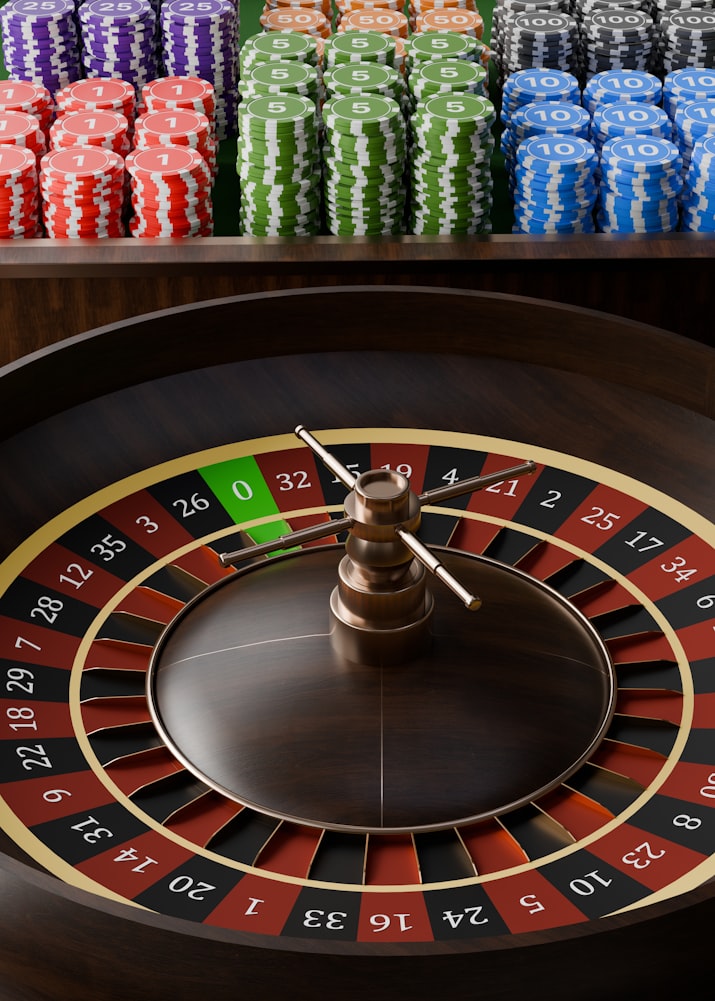
Awareness of personal gambling habits is crucial. Players should regularly evaluate their motivations for gambling, ensuring they are participating for fun rather than as a means to escape stress or financial difficulties. Keeping this perspective helps prevent the development of unhealthy gambling behaviors that could lead to addiction. Additionally, responsible gambling involves being informed about the odds and potential outcomes, helping players make educated decisions.

Incorporating responsible gambling practices can also enhance the overall gaming experience. When individuals approach gambling with a mindset focused on enjoyment rather than winning, they are likely to appreciate the social aspects and the thrill of the game. This positive approach encourages players to enjoy their time without experiencing negative emotions associated with financial losses, thus reinforcing the idea that gambling should be a form of leisure.

Setting Limits and Maintaining Control

Setting personal limits is one of the most effective strategies for maintaining control while gambling. Players can establish both time and monetary limits before they start playing, which can help in avoiding impulsive decisions. For example, someone might decide that they will only gamble for two hours and will not spend more than a specific amount of money. This pre-determined structure allows for a more controlled gambling experience and minimizes the risk of excessive losses.

Another important aspect is tracking one’s gambling activities. By keeping a record of how much time and money is spent, players can gain a clearer understanding of their habits. This practice not only helps in recognizing trends or patterns but can also prompt individuals to reconsider their gaming practices if they notice a deviation from their original limits. Additionally, many online platforms offer features that help users set these limits and even monitor their gaming behavior, making it easier to stay accountable.

Players should also be mindful of their emotional state while gambling. Engaging in gambling during times of stress or emotional upheaval can lead to poor decisions and potential overindulgence. It is important to be aware of these triggers and take breaks when needed. By stepping away from the gaming environment, individuals can reassess their motivations and feelings, ensuring they return to play when they are in a balanced state of mind.

Recognizing Signs of Problem Gambling

Recognizing the signs of problem gambling is a crucial step toward maintaining a responsible gambling lifestyle. Some common indicators include gambling to escape from negative emotions, lying about gambling habits, and feeling anxious or irritable when not gambling. Understanding these signs can help individuals take proactive steps before their gambling behavior escalates into a more serious issue. Recognizing these patterns early can prevent significant financial and emotional distress.

In addition to self-awareness, seeking support from friends or family can be beneficial. Loved ones can offer perspective and support, making it easier to discuss gambling habits openly. When individuals feel comfortable discussing their gaming experiences, they are more likely to seek help if they notice troubling patterns. Furthermore, support groups and counseling services exist specifically for those struggling with gambling addiction, providing valuable resources and community backing.

Lastly, education about gambling addiction is fundamental. By understanding the potential psychological effects and societal impacts of problem gambling, individuals can make informed choices. Resources are available that explain the risks involved, promoting healthier attitudes towards gambling. Being educated about the issue not only helps individuals safeguard themselves but also fosters a more informed community that understands the importance of responsible gaming.

Utilizing Support Tools and Resources

Most reputable gambling platforms offer a range of support tools designed to promote responsible gambling practices. Features such as self-exclusion options, deposit limits, and reality checks are invaluable for individuals looking to maintain control over their gaming habits. These tools empower players to take ownership of their gambling experience and create a safer environment for themselves.

In addition to built-in platform tools, external resources like hotlines and support websites play a significant role in supporting responsible gambling. These resources provide information on how to recognize problem gambling and offer guidance on seeking help. Furthermore, community outreach programs often organize events that promote awareness about responsible gambling, providing a platform for education and discussion.

It is important for players to familiarize themselves with these tools and resources. By knowing what support is available, individuals can act quickly if they feel their gambling habits are becoming problematic. Developing a proactive approach to responsible gambling, supported by accessible resources, can lead to a safer and more enjoyable gaming experience.

Aussie55: Promoting Safe Gambling Practices

Aussie55 is committed to providing a safe and enjoyable gaming experience for its players. With a strong focus on responsible gambling practices, the platform offers various tools designed to help players maintain control over their gaming habits. From customizable deposit limits to self-exclusion options, Aussie55 ensures that players have the resources they need to gamble responsibly.

In addition to its gaming features, Aussie55 prioritizes player education. The platform regularly shares information about responsible gambling, helping players understand the importance of setting limits and recognizing potential problem gambling signs. By fostering a community centered around responsible gaming, Aussie55 aims to enhance the overall experience for its players, ensuring that their time spent on the site remains enjoyable and safe.

Ultimately, Aussie55 embodies the principles of responsible gambling while providing an extensive selection of games and engaging experiences. With its user-friendly interface and dedication to player safety, Aussie55 stands out as a leading choice for those seeking a reliable online gaming environment. By prioritizing responsible gambling, players can enjoy their favorite games while safeguarding their well-being.

Leave a Comment

Your email address will not be published. Required fields are marked *